































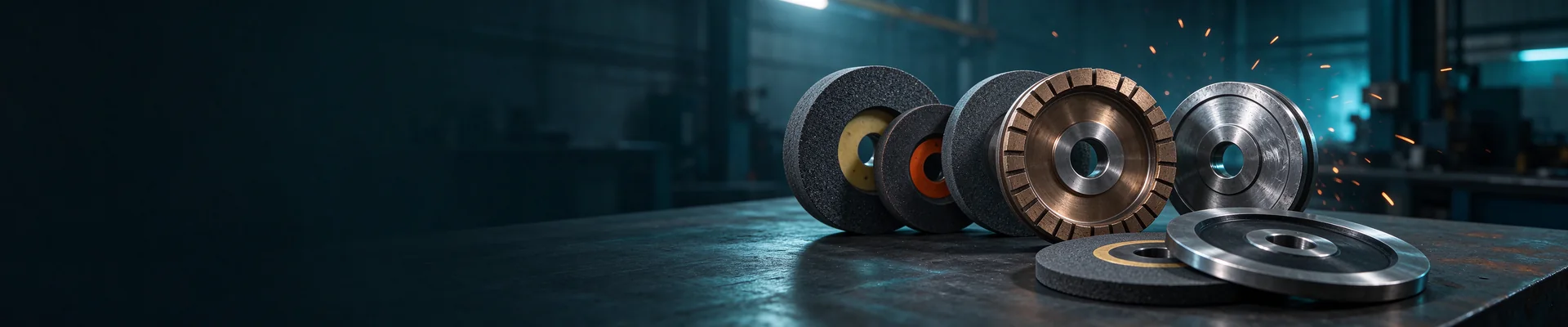
The advantages of resin diamond grinding wheel
Sin bond diamond grinding wheels use resin as the bonding agent to hold diamond grains. They are widely used for precision machining of hard brittle materials such as carbide, ceramics, glass and sapphire, thanks to their distinctive strengths.
Resin bonds have good elasticity and toughness. During grinding, the wheel can absorb partial impact and vibration. It produces flexible cutting action, which reduces edge chipping on brittle workpieces. This makes resin diamond wheels the top choice for finishing and edge grinding of cemented carbide tools. The grinding surface finished by resin diamond wheels achieves very low roughness, requiring little subsequent polishing work.
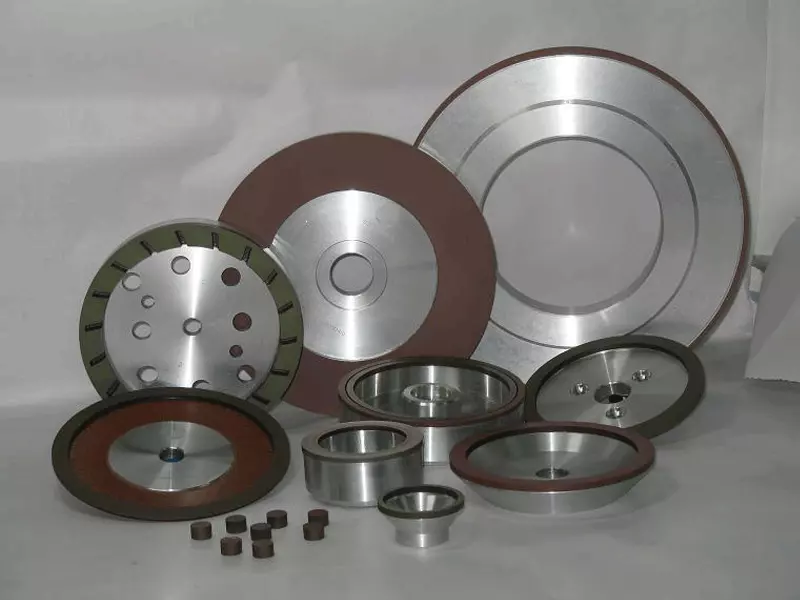
Resin bond wheels have low grinding force and low heat generation under proper parameters. Resin materials have certain lubricating properties, decreasing friction between bond and workpiece. They perform well for dry grinding scenarios where coolant cannot be applied. In addition, resin diamond wheels are easy to dress and trim. Operators can modify the wheel profile simply to adapt to form grinding requirements.
Still, resin bonds have temperature limits. Continuous high-temperature grinding will soften or carbonize the resin, leading to premature grain loss. Therefore, sufficient coolant is necessary for heavy grinding tasks. Compared with metal-bond diamond wheels, resin types are less resistant to heavy load but offer superior surface quality. For tool regrinding, optical glass processing and ceramic finishing, resin diamond wheels deliver remarkable processing quality and stable comprehensive performance.
Previous: No More
